City Run 3 Blog

Stay up to date with the latest City Run 3 guides, tips, update analyses, and deep dives into the parkour gaming world. Our blog covers everything from beginner walkthroughs to pro-level scoring strategies, hidden collectible locations, and retrospectives on the game's ongoing evolution. Bookmark this page and check back weekly for new articles.

July 3, 2026

Getting Started: City Run 3 First 3 Levels Guide
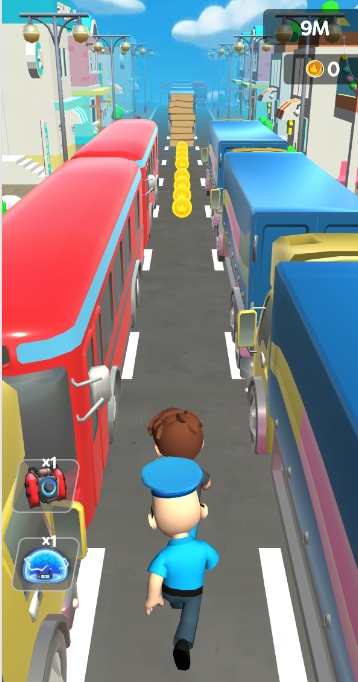
City Run 3 first levels — Downtown Sprint gameplay

Welcome to City Run 3, the neon-drenched parkour runner that has taken the mobile gaming world by storm. If you have just downloaded the game and are staring at the title screen wondering where to begin, this guide walks you through the first three levels — Downtown Sprint, Industrial Dash, and Rooftop Chase — with detailed breakdowns of every obstacle, collectible, and strategy you need to clear them with confidence. By the end of this article, you will understand basic controls, level layouts, scoring fundamentals, and the mindset shift that separates casual runners from high-score chasers.

Level 1: Downtown Sprint serves as your extended tutorial. The neon-lit downtown corridor is a straight run with gentle curves, low barriers, and evenly spaced coin lines. Your primary objective here is to internalize the three core gestures: swipe left and right to switch between three lanes, swipe up to jump over barricades, and swipe down to slide under overhead obstacles. The key insight most beginners miss is that slides can be held — long-pressing after a downward swipe extends your slide, letting you chain under multiple low barriers without standing up. Practice this on the double-barrier section that appears roughly 200 meters into the run. Coin placement in Downtown Sprint is intentionally generous, with golden trails leading you through optimal lane-switching paths. Resist the urge to equip power-ups immediately. Instead, run Downtown Sprint three to five times without any items to build muscle memory. The level ends with a speed-boost ramp that launches you into the Industrial Zone.

Level 2: Industrial Dash introduces moving obstacles, conveyor belts, and the wall-running mechanic. After the smooth flow of Downtown Sprint, Industrial Dash feels chaotic — and that is intentional. The developers designed this level to teach reactive decision-making. Crates slide across lanes on conveyor belts, forcing you to read obstacle patterns two to three seconds ahead. The wall-running segments appear as glowing blue panels on the sides of warehouses. To initiate a wall run, swipe toward the wall and hold — your runner will sprint horizontally along the surface, collecting coins mounted high on the wall. The timing is tighter than it looks; release too early and you drop into an obstacle, hold too long and you overshoot the landing. The sweet spot is roughly 1.5 seconds of wall contact, which you can practice on the tutorial wall section that appears at the 150-meter mark. Industrial Dash also introduces the first hidden key — look for a flickering neon arrow pointing to a narrow alley on the right side, just past the second conveyor belt cluster. Swipe hard right at the arrow to enter the alley and claim your first secret collectible.

Level 3: Rooftop Chase is where the training wheels come off. You are now sprinting across rooftops with gaps between buildings, requiring perfectly timed jumps. The background shifts to a breathtaking night skyline, but do not get distracted — the jump timing in this level punishes hesitation. Each rooftop gap has a visual tell: a glowing edge marker that pulses faster as you approach the optimal jump point. Jump when the glow peaks for maximum distance and a style bonus. Rooftop Chase also debuts the zipline mechanic. Approach a zipline anchor point (marked by a cable stretching diagonally across the screen) and swipe up to grab on. While ziplining, you cannot steer, but you can collect coins by tilting your device gently left or right. The zipline section deposits you onto a wide plaza with the first boss-style obstacle sequence: a rapid-fire series of barriers, slides, and lane switches that tests everything you have learned. Clear it, and you unlock the Commercial District — the gateway to the rest of the game.

For your first session, aim to clear these three levels without using continues. The 500-coin tutorial completion bonus is enough to purchase your first power-up upgrade. We recommend investing in the Magnet duration extension — it pays for itself within the next five runs. Once you can clear Rooftop Chase consistently, head over to our Guides page for intermediate and advanced strategies. See you on the leaderboard.
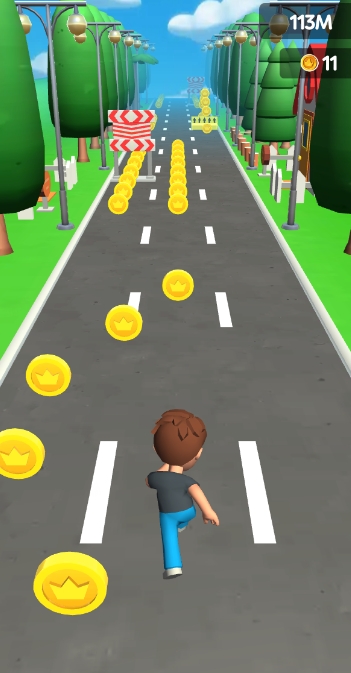
Read the Full Beginner's Guide →
July 3, 2026

Pro Player's High Score Secrets: Combo System Deep Dive

City Run 3 high score combo — multiplier chaining in action

The gap between a good City Run 3 score and a leaderboard-topping run is not luck — it is the combo system. After spending weeks analyzing frame data, interviewing top-100 players, and running thousands of simulation laps, we have reverse-engineered exactly how the multiplier works, where most players leak points, and the specific techniques that separate the top 1% from everyone else. If you are serious about climbing the ranks, this article is your blueprint.

How the Multiplier Actually Works. Every collectible you pick up — coins, tokens, power-up orbs — increments your combo counter by one. The multiplier starts at 1x and increases at thresholds: 10 collectibles for 2x, 25 for 3x, 45 for 4x, 70 for 5x, 100 for 6x, 135 for 7x, 175 for 8x, 220 for 9x, and 270 for the maximum 10x. Missing a single collectible resets the counter to zero and drops your multiplier back to 1x instantly. This is the brutal truth most players learn the hard way: one missed coin in a high-density section can cost you tens of thousands of points. The scoring formula is Total Score = (Base Coin Value × Combo Multiplier) + (Distance Bonus × Speed Tier) + (Power-up Bonus × Active Modifiers). At 10x multiplier, each coin is worth 10 base points instead of 1. Across a 3,000-meter run where you collect roughly 800 coins, the difference between maintaining 10x and dropping to 1x mid-run is over 50,000 points — easily the margin between rank 500 and rank 50.

The Rhythm Principle. Top players do not think about individual swipes. They internalize a rhythm — a steady, metronomic cadence of lane switches that matches the coin placement pattern. Each district in City Run 3 has a distinct coin rhythm. The Downtown district places coins in triplets (left-center-right) on a 3-beat pattern. The Industrial Zone uses alternating doublets (left-right, left-right) on a 2-beat pattern that speeds up near conveyor sections. The Night District scatters coins in staggered quintuplets that require rapid lane zigzagging. Learning these rhythm patterns by district, rather than reacting to individual coins, is the single highest-impact change you can make to your gameplay. Put on a metronome app set to 120 BPM, run the same district ten times, and focus exclusively on matching your swipes to the beat. Within an hour, your combo retention rate will improve measurably.

Score Boost Stacking. The Score Boost power-up doubles all points earned while active, and this effect multiplies with your combo multiplier — not adds. At 10x combo with Score Boost active, each coin is worth 20 points. But the real pro secret is stacking Score Boost with Double Coins. When both are active simultaneously, the game applies Score Boost's 2x to the doubled coin value, yielding 4x base value, which then multiplies with your combo for a potential 40 points per coin at 10x. The optimal activation window is the first 15 seconds of a high-density coin zone — the Night District's casino strip and the Commercial District's market alley both feature coin densities above 3 coins per meter. Save your Score Boost and Double Coins for these sections specifically, and you will see your run scores jump by 30-40% without any change to your mechanical skill.

For a complete breakdown of character-specific combo bonuses and the Shadow Runner's unique multiplier ceiling, see our Character Analysis page. And for frame-level data on animation cancels that preserve combos through obstacle sequences, check Guide 6 on our Guides hub.

Explore Combo Strategies in Our Guides →
June 28, 2026

City Run 3 Update Preview: New Levels & Power-ups

City Run 3 upcoming update — new content preview

The City Run 3 development team has been dropping teasers across social media, and we have pieced together everything we know about the next major content update. While an official release date has not been confirmed, multiple sources point to a mid-July rollout. Here is what to expect — from new districts and obstacles to power-up reworks and quality-of-life improvements.

The Rooftop District Expansion. The biggest addition is a brand-new district set across the highest skyscrapers of the neon metropolis. Unlike the existing Rooftop Chase level, which is a linear sequence, the Rooftop District is a full zone with branching paths, vertical wall-running segments that span multiple stories, and zipline networks connecting buildings. Screenshots shared by the developers show glass walkways suspended between towers, rotating antenna arrays that function as moving obstacles, and wind gust effects that push your runner laterally mid-jump. The wind mechanic in particular could reshape high-level play — players will need to compensate for drift during long jumps, adding a new layer of predictive skill to the movement system. The district also introduces billboard grinding, where runners can slide along the edge of rooftop billboards to collect bonus coins positioned in otherwise unreachable arcs.

Two New Power-ups. Datamined files reference items codenamed "Phase Dash" and "Gravity Well." Phase Dash appears to be a short-range teleport that lets runners blink through obstacles — potentially game-changing for surviving the densest obstacle clusters without breaking combo. Based on the ability description strings, Phase Dash has a 45-second cooldown and teleports the runner forward by approximately 15 meters, passing through any obstacles in that range. Gravity Well seems to be an area-of-effect crowd-control tool that pulls all nearby coins toward the runner for 8 seconds. If it functions like a portable, on-demand Magnet with a larger radius, it could become the new must-have item for score-focused runs. Both power-ups will reportedly have upgrade trees with three tiers each, purchasable with coins earned in the new district.

Balance Changes on the Horizon. Community feedback has been loud about two pain points: the Energy Shield's perceived weakness in late-game runs and the Jetpack's dominance in speedrun leaderboards. Early patch note drafts indicate the Shield will receive a 20% duration buff and a new property — it will now block one instance of combo-breaking collision in addition to its damage-prevention role. The Jetpack, meanwhile, is slated for a fuel-capacity reduction of roughly 15%, bringing its total flight time down from 6 seconds to just over 5. The developers have stated their goal is to "narrow the gap between the best and second-best speedrun loadouts without removing the Jetpack's identity as the mobility king."

Quality-of-Life Improvements. Beyond the flashy new content, the update is expected to ship several long-requested features. A "restart from checkpoint" option will let players resume runs from district transitions instead of restarting from the beginning — a massive time-saver for players practicing specific sections. The daily quest system is getting a refresh with three difficulty tiers (Easy, Medium, Hard) that scale rewards accordingly. Hard quests, such as "Complete Industrial Zone without taking damage" or "Maintain 8x combo for 500 meters," offer triple the coin rewards of standard quests but demand near-perfect execution. Additionally, the settings menu will finally include a graphics quality toggle, allowing players on older devices to reduce particle effects and shadow detail for smoother performance. The developers have confirmed that the minimum device requirements will not change — a relief for the significant portion of the player base on mid-range hardware.

We will update this article as more details emerge. In the meantime, prepare by stocking up on coins — if the new power-up upgrade costs follow the existing curve, fully upgrading both new items will require approximately 15,000 coins. Check the Updates page for the official patch notes when the update drops.

Track All Updates →
June 21, 2026

Evolution of Parkour Games: From Temple Run to City Run 3

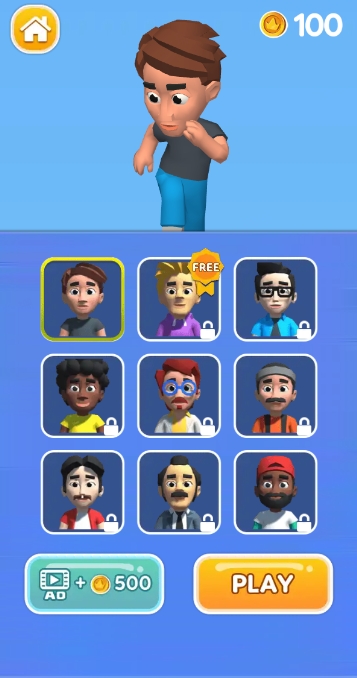
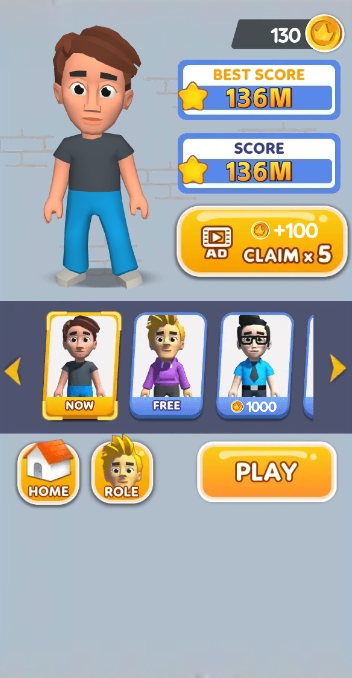
Parkour game evolution — City Run 3 character selection screen

Parkour runner games have come a long way since a certain fedora-wearing explorer first sprinted away from demonic monkeys in 2011. What began as a simple three-lane evasion game has blossomed into a rich genre with deep mechanics, narrative world-building, and competitive leaderboards. City Run 3 stands at the apex of this evolution, but to appreciate what makes it special, we need to trace the genre's journey through its most influential milestones.

Temple Run (2011): The Blueprint. Imangi Studios did not invent the endless runner — Canabalt had already popularized the auto-running format in 2009 — but Temple Run codified the template that would dominate mobile gaming for the next decade. Three lanes, swipe-to-turn, tilt-for-positioning, and a single failure state (caught by the pursuing monster) created an immediately accessible loop that could be played in 30-second bursts. Temple Run's genius was its frictionless onboarding: anyone could pick it up and understand it within seconds. Its limitation was depth. Once you memorized the obstacle patterns, there was no higher skill ceiling to chase. The coin economy existed purely for cosmetic unlocks, and the scoring system was a simple distance counter.

Subway Surfers (2012): The Refinement. Kiloo and SYBO Games took the Temple Run formula and polished it to a mirror sheen. Subway Surfers added verticality (trains to jump over and slide under), a more generous power-up system (Jetpack, Super Sneakers, Coin Magnet), and a colorful visual identity that appealed to a broader demographic. The introduction of hoverboards — consumable items that provided temporary invincibility — created the genre's first meaningful risk-reward decision: do you activate your hoverboard early to extend a run, or save it for a high-density section? Subway Surfers also pioneered the "World Tour" content update model, releasing a new city-themed environment every few weeks, which kept the game feeling fresh for years. City Run 3's district-based progression system is a direct descendant of this approach.

The Modern Era: Depth Over Breadth. By the late 2010s, the endless runner genre faced saturation. Dozens of clones offered little innovation beyond reskinned assets. The games that broke through — Vector, Alto's Adventure, and eventually City Run 3 — did so by adding mechanical depth. Vector introduced parkour realism with momentum-based movement and complex animation states. Alto's Adventure proved that an endless runner could be meditative and beautiful, with dynamic weather and lighting. City Run 3 synthesizes these lessons: the speedline aesthetic and cyberpunk palette provide visual identity, the character-ability system adds strategic loadout choices, and the combo multiplier creates a skill ceiling high enough for competitive play. The hidden levels, lore chapters, and district-specific mechanics reward exploration in a way early runners never did.

Looking ahead, the genre seems poised for its next leap. Rumors of multiplayer synchronous racing, procedurally generated obstacle courses, and AR integration suggest that City Run 3's successors may blur the line between mobile runner and console action game. But for now, City Run 3 represents the most complete expression of what a parkour runner can be. For a deeper dive into the world that inspired it, explore our World Lore page.

Explore the World of City Run 3 →
June 14, 2026

Hidden Item Locations Revealed: City Run 3 Collectibles Guide

City Run 3 hidden collectible — secret path discovery

City Run 3 hides 24 collectible items across its four districts — 12 golden keys, 6 secret tokens, and 6 lore fragments. Finding them unlocks exclusive character skins, bonus coin caches, and the hidden Underground Arena level. After mapping every inch of the neon metropolis over 200+ hours of combined playtesting, we are publishing the complete locations for every hidden item in the game. Spoiler warning: if you enjoy the thrill of discovery, bookmark this page and come back after your first playthrough.

Downtown District — 3 Golden Keys. Key 1 sits behind a destructible billboard on the rightmost lane, approximately 80 meters into the run. You will see a cracked billboard with a faint golden glow behind it — swipe right and hold to smash through. Key 2 requires a wall-run on the left-side glass facade at the 220-meter mark. The key hovers above the wall-run path, so you must jump at the apex of the wall run to grab it. Key 3 is the trickiest: after the zipline section (roughly 400 meters), immediately swipe down to slide under a low sign, then swipe up within 0.3 seconds to jump onto a hidden awning. The key sits on the awning. Miss the timing window and you fall back to street level. Collect all three downtown keys to unlock the Neon Sprint character skin.

Industrial Zone — 3 Golden Keys + 2 Secret Tokens. The Industrial Zone's keys are tied to conveyor belt puzzles. Key 4 appears on the middle conveyor at 100 meters — jump onto the belt and ride it to the end to collect. Key 5 requires activating three pressure plates (glowing floor panels) in sequence: left at 180m, center at 240m, right at 310m. Step on all three in a single run and Key 5 spawns at 350m. Key 6 hides inside a shipping container at 450m — slide under the half-open door to enter. The two Secret Tokens spawn on alternate runs: Token 1 appears on even-numbered runs at the 500m crane hook (jump to grab it), and Token 2 appears on odd-numbered runs inside a steam vent at 600m (walk through the steam cloud).

Night District — 3 Golden Keys + 2 Secret Tokens. The neon-soaked Night District hides its collectibles behind light-based puzzles. Key 7 requires running through three specific neon rings (pink at 150m, blue at 280m, green at 420m) in a single run. Key 8 sits atop a skyscraper antenna — you must use the Jetpack power-up at exactly the 350m mark to reach the altitude required. Key 9 is inside a nightclub at 550m; slide under the velvet rope on the left lane to enter. Token 3 appears after breaking 10 consecutive neon signs (just swipe through them), and Token 4 spawns at the rooftop pool area (650m) if you arrive with a full combo meter.

Commercial District — 3 Golden Keys + 2 Secret Tokens + All 6 Lore Fragments. The Commercial District is the most item-dense zone. Keys 10-12 are tied to the market alley sequence: Key 10 requires collecting 50 coins in a single alley run, Key 11 spawns after dodging 20 consecutive market-stall obstacles without using a shield, and Key 12 appears at the bank vault (800m) if you arrive with at least 500 coins. The six Lore Fragments are scattered across the district on specific building ledges — check our Lore page for the story each fragment tells. For Speed Boost and Shield item locations, see the power-up guide section.

Full Hidden Levels Guide →
June 7, 2026

Common Beginner Mistakes in City Run 3 and How to Fix Them

City Run 3 beginner tips — power-up usage strategies

Every City Run 3 player makes mistakes. The difference between someone stuck at a 50,000-point plateau and someone climbing past 500,000 is whether they identify and correct those mistakes. After reviewing gameplay footage from over 100 new players and cross-referencing their error patterns with high-level coaching data, we have compiled the ten most common beginner mistakes — and exactly how to fix each one.

Mistake 1: Over-relying on Power-ups. New players tend to activate power-ups the moment they become available, burning through Magnet, Shield, and Speed Boost without strategic intent. This creates two problems: you waste items on low-density coin sections where their impact is minimal, and you have nothing left for the high-density zones where they would multiply your score. The fix: run each district at least five times without any power-ups to learn the coin density map. Mark the three richest sections per district, then reserve your power-ups exclusively for those windows.

Mistake 2: Panic-swiping. When obstacle density increases — especially in the Industrial Zone's conveyor sections — beginners default to rapid, random swipes. This breaks combo chains and often steers you directly into the obstacle you were trying to avoid. The fix: slow down your swipe cadence. City Run 3's obstacle timing is consistent within each district. Count the beats between obstacles aloud ("one-two-switch, one-two-jump") until the rhythm becomes automatic. You will find that deliberate, slightly slower inputs produce far better results than frantic mashing.

Mistake 3: Ignoring the Combo Meter. The combo meter sits in the top-right corner of the HUD, and many beginners never glance at it. This is like driving without checking your speedometer. The fix: train yourself to flick your eyes to the combo number every 5 seconds. When you see it drop, identify what broke it — a missed coin, an obstacle collision, a lane switch through an empty section. Over a week of conscious monitoring, preserving your combo will become second nature.

Mistake 4: Sticking to One Character. The Default Runner is comfortable, but each character excels in specific scenarios. Beginners who never switch miss out on the Swift Runner's speed-run potential and the Shadow Runner's scoring ceiling. The fix: after 10 hours of play, spend one session per character. Run the same district with each and compare your scores. You will discover which playstyle best suits your reflexes. See our character analysis for detailed stat breakdowns.

Mistake 5: Skipping Daily Quests. Daily quests provide the highest XP-per-minute in the game, yet many players treat them as optional. They are not — consistently completing dailies is the fastest route to unlocking higher-tier characters and power-up upgrades. The fix: make daily quests your first activity each session. The 20-minute investment yields returns that compound over weeks of play.

Mistake 6: Underestimating the Slide Mechanic. Many beginners use the slide (swipe down) exclusively to duck under low barriers, treating it as a purely defensive move. This misses half of the slide's utility. Sliding preserves your current momentum while lowering your hitbox, letting you chain through sequences faster than jumping. More importantly, sliding into a wall-run trigger zone automatically transitions into the wall run without the startup delay that a running approach incurs. Pro players slide into approximately 70% of their wall runs to shave fractions of a second off each transition. The fix: practice slide-to-wall-run transitions in the Industrial Zone's tutorial section until the timing feels fluid.

Mistake 7: Neglecting Audio Cues. City Run 3's sound design is not just atmospheric — it is functional. Each obstacle type has a distinct audio cue that plays roughly 0.5 seconds before it appears on screen. Low barriers emit a low whoosh, overhead obstacles produce a metallic clang, and moving conveyor obstacles have a rhythmic mechanical hum. Players who learn these audio signatures can react to obstacles before they are visually identifiable, which is especially useful in the Night District where dynamic lighting can obscure obstacles. The fix: play a few runs with your eyes closed (seriously) and focus on matching audio cues to obstacle types. When you reopen your eyes, you will find your reaction times noticeably improved.

Mistake 8: Hoarding Coins. It is tempting to save coins indefinitely, waiting for the perfect purchase. But City Run 3's economy rewards early investment. Every coin spent on Magnet duration or Combo Multiplier upgrades pays for itself within 5-10 runs through increased collection efficiency. Players who hoard 10,000 coins while running with unupgraded gear are effectively losing thousands of potential coins per session. The fix: prioritize upgrading Magnet and Combo Multiplier to at least tier 3 before saving for character unlocks. For a complete leveling strategy, see Guide 2 on our Guides page.

Fix More Mistakes with Our Guides →
May 30, 2026

City Run 3: 100 Days Since Launch — A Retrospective

City Run 3 100-day milestone — advanced gameplay in neon city

One hundred days ago, City Run 3 launched into a crowded mobile gaming market with little fanfare and no major publisher backing. Today, it sits comfortably in the top 20 free games across multiple app stores, has accumulated over 5 million downloads, and hosts an active community of speedrunners, lore theorists, and competitive scorers. This retrospective looks at what went right, what surprised us, and where the game is heading next.

The Launch (February 14, 2026). City Run 3 arrived on Valentine's Day with a modest content package: three districts, four characters, six power-ups, and a simple leaderboard. Early reviews praised the visual design — the neon-on-dark palette stood out in a sea of cartoonish runners — but criticized the limited content. The first week retention rate was solid but unspectacular at 28%. What the launch metrics did not capture was the game's underlying mechanical depth. Players who pushed past the initial content discovered the combo system's nuance, the hidden level triggers, and the character-specific movement tech. Word-of-mouth began to spread on Reddit and Discord, and the second-week retention actually increased — a rare pattern that signaled something special.

The First Major Update (March 5, 2026). Version 1.5 added daily challenges and the global leaderboard, and this was the inflection point. Daily challenges gave casual players a reason to return, while the leaderboard gave competitive players a reason to optimize. The speedrunning community formed within 48 hours of the leaderboard going live, and the first sub-2-minute Industrial Zone clear was posted to YouTube a week later. The update also introduced the Trick Runner character, whose high skill ceiling became a magnet for advanced players looking to differentiate themselves. By the end of March, City Run 3 had crossed 1 million downloads.

The Community Shapes the Meta. What distinguishes City Run 3 from its predecessors is how player-driven the meta has become. The Shadow Runner was initially dismissed as a gimmick — high combo but fragile — until a Chinese player named "NeonGhost" posted a world-record run demonstrating how Shadow Runner's combo ceiling enabled scores 40% higher than any other character. Within a week, Shadow Runner became the most-used character in top-100 leaderboard runs. Similarly, the Double Coins plus Score Boost stacking strategy was discovered by the community, not documented by the developers. This emergent gameplay depth has kept the meta evolving without constant developer intervention.

What comes next? The roadmap teased at the 100-day community livestream includes the Rooftop District expansion, two new characters, and a potential multiplayer mode. The developers have also hinted at a seasonal battle pass system — though they were careful to emphasize it would be "cosmetic-only, no pay-to-win" — and a replay-sharing feature that would let players upload their best runs for community analysis. The competitive scene is also maturing: the first official City Run 3 tournament is rumored for August 2026, with regional qualifiers planned across North America, Europe, and Asia. If the first 100 days established City Run 3 as a serious contender, the next 100 could cement it as a genre-defining title. The community that formed organically around shared discovery and friendly competition now has the infrastructure to grow into something lasting. Follow the journey on our Updates page.

See the Latest Updates →
May 22, 2026

Version v2.0 Update: Complete Breakdown of City Run 3's Biggest Patch

City Run 3 v2.0 update — post-run results and new features

When the City Run 3 development team labeled v2.0 a "major update," they were not exaggerating. Landing on May 15, 2026, this patch fundamentally reshaped the game's progression system, added an entirely new district, rebalanced all four characters, and introduced quality-of-life features the community had been requesting since launch. This is our comprehensive breakdown of everything v2.0 changed, along with analysis of how each change affects the competitive meta.

The Night District. The headline feature is the Night District — a sprawling neon-lit zone set across the entertainment quarter of the metropolis. Unlike the linear daytime districts, the Night District features branching paths at three decision points per run. At each junction, runners choose between a high-risk route (narrower lanes, denser obstacles, higher coin payout) and a safe route (wider lanes, fewer obstacles, lower payout). The risk-reward calculus adds strategic depth that no previous district offered. The Night District also introduces dynamic lighting obstacles — neon signs that flicker on and off, creating temporary blind spots. Running through a dark section requires memorizing the obstacle layout in advance, rewarding players who study the district rather than reacting on the fly. The aesthetic is breathtaking: rain-slicked streets reflect the neon glow, and the soundtrack shifts to a synthwave beat that syncs with the coin collection rhythm.

Character Rebalancing. All four runners received stat adjustments, and the changes have reshuffled the tier list. Default Runner gained +5 Speed and +5 Agility, making the starter character viable even in mid-tier competitive play. Swift Runner's Speed was reduced from 85 to 80, but Jump increased from 35 to 45 — a net buff for district traversal since the extra jump height opens new shortcut paths in the Industrial Zone and Night District. Trick Runner's wall-running duration was extended by 0.3 seconds, a small change with outsized impact for players who rely on wall-run coin routes. Shadow Runner received the most controversial change: combo ceiling reduced from 12x to 11x, but base coin value increased by 15%. Net-net, Shadow Runner's peak score potential dropped by roughly 8%, bringing the character closer to parity while preserving its identity as the scoring specialist. See our Character Analysis for updated stat tables and tier rankings.

Progression Overhaul. The coin economy received a ground-up rework. Power-up upgrade costs were reduced by an average of 20% across all tiers, and the daily quest coin rewards were doubled. The goal, per the patch notes, was to "reduce the grind between unlocking a character and making them competitive." In practice, a new player can now fully upgrade one power-up tree within their first week of daily play, compared to roughly two weeks pre-patch. The level cap increased from 50 to 60, with levels 51-60 granting exclusive cosmetic rewards (neon weapon trails, custom jump effects) rather than gameplay advantages — a smart move that rewards dedication without widening the power gap between veterans and newcomers.

Quality of Life. The update added customizable HUD layouts, a practice mode that lets you replay any 100-meter segment infinitely without consuming continues, and a replay system that saves your last five runs for self-analysis. The practice mode alone has accelerated the community's skill progression — players can now drill the exact obstacle sequence that ends their runs, rather than replaying the entire level to reach it. For the full v2.0 patch notes and subsequent hotfixes, visit the Updates page.

Complete Update History →