The World of City Run 3 — Complete Lore & Story Guide
Nova Prime is not just a city — it is a living, breathing organism of steel, glass, and neon. Beneath the corporate towers and above the smog-choked streets, a parallel civilization thrives: the runners. This is the definitive record of the metropolis that spawned a movement, the districts that shaped the sport, the legends who defined the circuit, and the secrets buried deep in the city's foundations.
The Neon Metropolis
Long before the first runner vaulted a rooftop railing, before the underground circuit had a name, before the neon signs of the Night District blazed their eternal purple-and-cyan glow into the sky — there was only Nova Prime: a city built on ambition and desperation in equal measure.
Founded in 2087 after the collapse of the old coastal megacities, Nova Prime rose from the ruins of a decommissioned military industrial zone. Three corporate conglomerates — Apex Dynamics (energy and infrastructure), Syntech Industries (biotech and neural interfaces), and OmniCore Logistics (transportation and drone networks) — funded the initial construction in exchange for perpetual governance rights. What emerged was a city stratified not by geography but by elevation: the glittering corporate spires of the Skybridge District at the top, the bustling Commercial District in the middle, the industrial sprawl below, and the lawless, beautiful chaos of the Night District occupying the spaces in between.
By the 2130s, Nova Prime's population had swelled beyond 40 million. Public transit buckled under the weight of commuter demand. Traffic on the lower levels became a permanent gridlock — a condition the city's planners referred to, with grim bureaucratic humor, as "continuous static occupancy." Citizens began to look up. They noticed that the spaces between buildings — the ledges, the fire escapes, the maintenance catwalks, the skybridges connecting corporate towers — formed a second, hidden network above the choked streets. A network that moved faster. A network that belonged to no corporation.
Parkour, an art form born in the suburbs of late 20th-century France, found new purpose in Nova Prime. What had been a discipline of efficient movement through urban space became, in this city of vertical extremes, a survival skill. The first runners were not athletes — they were couriers, delivering packages across the skybridge network faster than any drone. They were line workers who discovered that the 45-minute commute through the clogged lower levels could be reduced to an eight-minute run across the rooftops. They were teenagers in the Night District who found that the city's architecture, when viewed not as a barrier but as a path, became a playground of infinite possibility.
The turning point came in 2146, when a courier named Kai Drayton — a name that would later become synonymous with the sport itself — broadcast a live run from the Industrial Zone to the top of the Apex Spire, a 2.4-kilometer vertical ascent completed in just over eleven minutes. The feed, captured on Kai's helmet cam and streamed through a pirate network bypass, was viewed by an estimated two million citizens within 24 hours. The video did more than entertain — it revealed that the city was not a cage. It was a course. And anyone with the courage, the skill, and a pair of grip-soled shoes could run it.
Within a year, rooftop running communities had formed in every district. The corporations, initially hostile to what they termed "unsanctioned vertical trespassing," found themselves unable to police a population that had learned to move faster than their security drones. By 2150, the city council formally recognized parkour as a "cultural heritage activity" of Nova Prime — a face-saving concession that amounted to tacit legalization. The age of the runner had begun.
The Four Districts
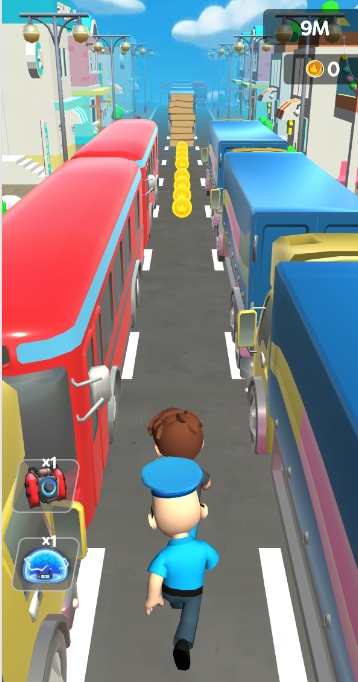
Nova Prime is not a single city but four, stacked and interwoven, each with its own architecture, its own hazards, and its own running culture. Understanding the districts is the first step toward understanding City Run 3 itself — every level, every obstacle, and every secret path is rooted in the geography of these four zones.
The Industrial Zone
The lowest and oldest layer of the city, the Industrial Zone is where Nova Prime began — a labyrinth of decommissioned factories, derelict refineries, and rusting conveyor systems that stretch for kilometers beneath the commercial levels. The zone's architecture is brutal and functional: wide concrete platforms, exposed steel beams, cargo containers stacked like children's blocks, and massive ventilation shafts that create unpredictable wind currents. For runners, the Industrial Zone is both training ground and proving ground. Its wide-open spaces and abundant vaulting surfaces make it ideal for beginners learning the fundamentals of momentum and flow. But its hazards — unstable catwalks, corrosive chemical pools, and the occasional automated freight drone that still patrols long-abandoned routes — ensure that complacency is punished swiftly. The Industrial Zone is where the underground circuit holds its rookie qualification trials, and no runner earns their circuit name without first surviving a full run through Sector G-7, the so-called "Gauntlet."
The Commercial District
Rising directly above the Industrial Zone, the Commercial District is the city's beating economic heart. Gleaming plazas, multi-tiered shopping arcades, corporate headquarters, and residential superblocks create a dense urban canyon where the sun reaches street level for only four hours a day. The Commercial District's running style emphasizes precision over raw speed — tight cornering, rapid lane-switching through crowds, and the strategic use of market stall awnings as improvised trampolines. The district's signature feature is the Grand Promenade, a two-kilometer elevated pedestrian walkway lined with holographic advertisements that can be run end-to-end in under ninety seconds by an experienced runner. Security drones patrol the Promenade in unpredictable patterns, and runners have learned to read their patrol rhythms the way ancient sailors read the tides.
The Night District
When the corporate headquarters power down and the shopping arcades shutter their gates, the Night District comes alive. Occupying the western quarter of the mid-city levels, the Night District is a riot of neon signage, holographic club entrances, rooftop bars, and black-market bazaars. Here, the distinction between legal and illegal blurs into irrelevance. The Night District's architecture is vertical and chaotic — cramped alleyways, steep exterior staircases, neon tubes that double as grip rails, and wall-running surfaces that shimmer with reactive light displays triggered by a runner's proximity. It is the most technically demanding district to run, requiring constant transitions between wall-runs, slides, and precision jumps. The Night District is also home to the Crimson Circuit, an unsanctioned race series held at midnight under shifting neon light conditions that make visibility a luxury. Some of the most famous runners in history built their reputations on the Crimson Circuit, and its champion holds more prestige in the running community than any corporate-sponsored athlete.
The Skybridge District
At the apex of Nova Prime — so high that the smog layer becomes a carpet of gold beneath the sunrise — the Skybridge District is the domain of the corporate elite. Glass-walled executive suites, private aerocar landing pads, and climate-controlled gardens connect via a network of enclosed skybridges that offer breathtaking views of the city below. For most citizens, the Skybridge District is accessible only with corporate clearance. For runners, it is the ultimate challenge. The skybridges are wide, fast, and deceptively dangerous — their transparent floors create depth-perception illusions that have caused even veteran runners to misjudge landings. The district's security systems are the most advanced in the city, including motion-tracking drones, biometric scanners, and pressure-sensitive floor panels. Running the Skybridge District is not merely an athletic feat — it is an act of defiance, a statement that no part of the city is off-limits to those skilled enough to reach it. The Skybridge Summit Run, held once a year, is the single most prestigious event in the running world, and only the top-ranked runners on the underground circuit receive an invitation.
Legendary Runners
Every runner in Nova Prime has a story. But four have become legends — their names spoken in the same breath as the city itself, their techniques studied and emulated by every newcomer who steps onto a rooftop with dreams of circuit glory.
The Default Runner — "The Pioneer"
Before the circuit, before the training academies, before anyone believed that running could be more than a means of commuting — there was Kai Drayton, the courier whose 2146 broadcast changed everything. Known in the early days simply as "The Pioneer," Kai never sought fame. Born in the Industrial Zone to a family of maintenance workers, Kai learned the rooftops out of necessity: delivering repair parts across the zone by foot was faster and cheaper than hiring a freight drone. Kai's running style is the foundation upon which all modern techniques are built — smooth, efficient, and balanced, with no single attribute prioritized over the others. Kai retired from active competition in 2160 but remains a mentor figure in the running community, occasionally appearing at rookie trials to offer quiet words of encouragement to terrified first-timers. Kai's philosophy, often quoted in training manuals, is simple: "The city does not fight you. It offers you a path. Your only job is to see it."
The Swift Runner — "The Gale"
Rika Tanaka, known on the circuit as "The Gale," is the fastest runner in the recorded history of Nova Prime. Her 2148 record on the Grand Promenade — 78.3 seconds, a time that required sustained speeds exceeding 40 kilometers per hour — stood unbroken for six years before being surpassed by Rika herself in 2154. Unlike Kai, who came from necessity, Rika came from obsession. A former competitive sprinter whose career ended after a corporate sponsorship dispute, Rika turned to parkour as a way to reclaim the speed that had been taken from her. Her running style is all-or-nothing: blistering straight-line acceleration with minimal deviation, designed to outrun obstacles rather than navigate around them. Rika's signature move, the Gale Skip — a rapid series of wall-bounces that maintains forward momentum while ascending vertical surfaces — is taught in advanced training programs across the city. She vanished from the public eye in 2158, reportedly training in the abandoned sectors of the Industrial Zone for a comeback run that has yet to materialize. Some say she is searching for a route that can break the 70-second barrier on the Promenade. Others say she has already found it and is waiting for the right moment to reveal it.
The Trick Runner — "The Phantom"
If Kai built the foundation and Rika pushed the speed limits, Marcus "Phantom" Okonkwo redefined what movement itself could look like. A former dancer and gymnast who discovered parkour at age 27 — late by circuit standards — Marcus developed a running style that prioritized creativity over velocity. Where other runners saw a straight path from point A to point B, Marcus saw a canvas. His runs through the Night District became legendary not for their speed but for their artistry: backflips over security barriers that shaved milliseconds off landing times, spiraling wall-runs that used centrifugal force to maintain grip on vertical surfaces, and a unique mid-air body rotation that allowed him to change direction without losing momentum. The Phantom's greatest contribution to running culture is the concept of Flow State — the idea that a truly perfect run is not thought but felt, an intuitive merging of body and environment that transcends conscious decision-making. Marcus still runs the Night District every week, and younger runners often gather on rooftops just to watch him work. He has never competed in a formal circuit event, insisting that competition corrupts the purity of the art form. His unofficial night runs are watched by more spectators than most sanctioned races.
The Shadow Runner — "The Ghost"
No runner in Nova Prime is more mysterious — or more feared in competition — than the one known only as "The Ghost." No confirmed name, no public appearances, no interviews. The Ghost emerged in 2155 with a series of anonymous time trials on the Skybridge Summit course, each one faster than the last, each one uploaded to the circuit's secure network with no identifying metadata. What makes the Ghost unique is an almost supernatural ability to maintain perfect combo chains. While most runners experience combo decay — the gradual loss of momentum and scoring efficiency that occurs when a sequence of moves is interrupted — the Ghost seems immune. Runs longer than ten kilometers have been recorded with no combo breaks whatsoever, a feat that circuit statisticians describe as "theoretically impossible under known physiological constraints." The Ghost's identity remains the subject of intense speculation. Theories range from a collective of multiple runners sharing a single alias, to a Syntech neural-interface user whose reaction times have been artificially enhanced, to the more romantic notion that the Ghost is simply a runner who has achieved a level of mastery that renders the need for identity irrelevant. The Ghost has never lost a sanctioned circuit race, and their unbeaten record is the golden standard against which every aspiring runner measures themselves.
The Underground Circuit
What began in 2148 as a handful of couriers racing each other across the Industrial Zone for pocket change has evolved into Nova Prime's most sophisticated — and least regulated — sporting institution. The Underground Circuit is not a single league but a distributed network of race organizers, timekeepers, and betting houses that collectively operate the city's parkour competition ecosystem.
Organization & Governance
The circuit has no central authority. Instead, it is governed by the Council of Lines — a rotating group of twelve retired runners who are elected by active competitors to two-year terms. The Council does not own races or collect fees. Its sole function is to maintain the Circuit Codex, a living rulebook that standardizes race formats, safety protocols, and ranking calculations across all sanctioned events. The Codex's first rule, unchanged since 2148, reads: "A runner shall not interfere with another runner's line. All paths are valid. Only the clock is judge."
Below the Council, each district operates its own Circuit Chapter — a local organizing body that schedules weekly time-trial events and monthly championship races. Chapter leaders, known as Line Marshals, are responsible for course design, hazard inspection, and emergency response coordination. The four Chapters maintain a tense but functional relationship: each wants their district to produce the top-ranked runners, and inter-chapter rivalries are as fierce as any individual competition.
Ranking System
The circuit ranks runners across five tiers, each with its own privileges and expectations. Rookie — the entry tier for new runners who have completed their qualification trial. Rookies compete in time-trial events only and are ineligible for prize pools. Runner — achieved after completing 10 sanctioned races with no disqualifications. Runners gain access to monthly championship events and modest prize purses. Veteran — requiring 50 completed races and a minimum average time ranking in the top 40% of all active runners. Veterans can compete in any circuit event and receive invitations to inter-district invitationals. Elite — limited to the top 100 ranked runners in the city. Elites have reserved starting positions, appearance fees, and sponsorship eligibility. Legend — a tier that has no numerical cutoff. Legend status is conferred by unanimous vote of the Council of Lines and has only been awarded nine times in the circuit's history. Legends are exempt from qualifying rounds for any event they choose to enter.
Prize Structure & Economy
The circuit's prize pools are funded by a combination of spectator contributions, corporate sponsorships, and betting house percentages. A typical monthly championship race distributes approximately 50,000 credits across the top 10 finishers, with the winner taking 40%. The annual Skybridge Summit Run — the circuit's flagship event — awards a winner's purse of 250,000 credits, making it the richest single race in the sport. Beyond prize money, the circuit sustains a parallel economy of trainers, gear manufacturers, route cartographers, and medical specialists who serve the running community. An estimated 15,000 citizens of Nova Prime earn their primary income from circuit-related activities, making it one of the city's largest informal economic sectors.
Tech & Gadgets
The power-ups that runners deploy during races are not arbitrary game mechanics — they are the product of decades of technological innovation, corporate competition, and black-market ingenuity. Every gadget in a runner's arsenal has a story.
Super Magnet — Apex Dynamics MN-7 Field Generator
Originally developed by Apex Dynamics for automated freight collection in their warehouse facilities, the MN-7 generates a localized electromagnetic field with a 20-meter radius. When miniaturized into a wrist-mounted unit, it pulls small metallic objects — including the standardized titanium-alloy circuit coins scattered along race routes — directly toward the runner. The military-grade version of the MN-7 was classified until 2151, when blueprints were leaked to the running community through the Night District's information brokers. Apex Dynamics has since leaned into the unauthorized use of their technology, recognizing that every runner wearing an MN-7 is effectively a mobile advertisement for their brand.
Energy Shield — Syntech KD-9 Personal Barrier
Syntech Industries' venture into personal protective technology produced the KD-9, a body-worn energy projector that deploys a kinetic dampening field capable of absorbing up to three high-impact collisions before requiring a 90-second recharge cycle. The KD-9 was designed for industrial workers operating in hazardous environments, but runners quickly recognized its value. A single KD-9 deployment can absorb a collision with a security drone, a fall from a misjudged jump, or an impact with a ventilation shaft wall at full sprint speed. Syntech's official position condemns the use of KD-9 units in circuit racing, but their sales figures in Night District distribution channels suggest a different story. The unit's nickname among runners — "The Second Chance" — reflects its near-mythical status as the gadget that has saved more runners' careers (and lives) than any other piece of equipment.
Speed Boost — OmniCore VX Impulse Thruster
The VX Impulse Thruster represents a radical miniaturization of the propulsion systems OmniCore uses in their long-haul cargo drones. The wrist-mounted unit releases a controlled burst of compressed ionized gas that provides approximately 2.8 seconds of acceleration, increasing a runner's velocity by roughly 60% during that window. The VX's fuel cell carries enough charge for a single burst before requiring a 120-second atmospheric recharge period — a limitation that forces runners to choose their deployment moments with strategic precision. The original VX prototype was stolen from an OmniCore research facility in 2153 by a runner known only as "Wrench," who then spent six months reverse-engineering the unit for compatibility with standard runner gear. Wrench was never caught and has since become a folk hero in the running community, celebrated in graffiti murals across the Night District.
Double Coins — Counterfeit Economy Exploit
The Double Coins effect is not a gadget at all — it is an exploit. Circuit coins contain embedded RFID chips that register a runner's collection count as they pass through scoring checkpoints. In 2154, a Night District hacker collective called NullSignal developed a portable device capable of spoofing the RFID signal, causing each collected coin to register as two in the circuit's scoring system. The device became wildly popular despite being explicitly banned in sanctioned races. Rather than fight an unwinnable technological war, the Council of Lines reached an uneasy compromise in 2156: the Double Coins effect is now a limited-duration power-up distributed at select checkpoints during official events, converting what was once a cheating tool into a sanctioned strategic element. The original NullSignal device is preserved in the Night District's Museum of Unauthorized Technology, alongside the first MN-7 prototype and Wrench's original VX thruster.
Jetpack — Apex Dynamics PH-1 Personal Flight Unit
The PH-1 is the most controversial piece of equipment ever introduced to the running circuit. Developed by Apex Dynamics as a short-range personal flight solution for their maintenance crews working on the Skybridge District's exterior surfaces, the PH-1 provides approximately four seconds of controlled vertical and horizontal thrust. Purists argue that the Jetpack violates the fundamental principle of parkour — that movement should be generated by the runner's own body. Technologists counter that the Jetpack simply extends what a runner can do, and its limited fuel supply and long recharge time make it a strategic choice rather than a replacement for skill. The Council of Lines has restricted Jetpack use to Veteran-tier events and above, effectively making it a reward for dedicated runners who have proven their fundamental abilities without relying on technological assistance.
Hoverboard — OmniCore SR-2 Surface Runner
The SR-2 Hoverboard began life as OmniCore's failed attempt to create a personal transportation device for the Commercial District's pedestrian zones. The original SR-2 was too fast for casual users, too unstable for elderly riders, and too expensive for the mass market. It was a commercial disaster — and a perfect piece of running equipment. The SR-2's magnetic repulsion system allows it to skim approximately 15 centimeters above any metallic or conductive surface, effectively eliminating ground friction. In the hands of a skilled runner, the Hoverboard transforms the Industrial Zone's long, flat stretches into high-speed corridors where velocities approaching 70 kilometers per hour are achievable. Like the Jetpack, the Hoverboard is restricted to upper-tier events, and its use demands a completely different approach to line selection and obstacle navigation.
Urban Legends
Every city has its secrets. Nova Prime has more than most — hidden levels woven into the fabric of the city itself, accessible only to those who know where to look and how to move. These are the stories behind the hidden realms that only the most dedicated runners ever experience.
The Neon Tunnels
Beneath the Industrial Zone runs a network of maintenance tunnels constructed during the city's founding — kilometers of abandoned subway tubes, forgotten service corridors, and drainage channels illuminated only by the dim glow of emergency lighting and the bioluminescent fungi that have colonized the walls. The tunnels are rumored to contain the Three Keys of Nova Prime: physical keycards left behind by the city's founding engineers, each one granting access to a different section of the underground network. Collect all three, and a hidden route opens — a straight-line sprint through the longest continuous underground passage in the city, ending in a chamber filled with currency caches deposited by decades of lost freight drones. The keys' locations change with every circuit season, and only a handful of runners have ever collected all three within a single run. The current record for a complete Neon Tunnels clear — from first key pickup to vault entry — is held by the Ghost, at 4 minutes and 12 seconds.
In-Game Unlock: Collect 3 hidden keys scattered across the Industrial Zone. Each run randomizes their positions among 12 possible spawn points. Check our Hidden Levels Guide for detailed key location maps and optimal collection routes.
The Rooftop Circuit
The Night District's skyline conceals a course that does not exist on any official map: a sequence of rooftops, connected by precisely spaced jumps and wall-run transitions, that forms a perfect loop around the district's perimeter. The Rooftop Circuit is not a constructed track — it is an emergent property of the district's architecture, a path that was never designed but simply exists, waiting to be discovered. The circuit's origin story centers on a Night District runner named Vera Sol, who in 2157 attempted to wall-run the exterior of the Crimson Tower — the district's tallest structure — from base to rooftop. She failed on her first twelve attempts, each time forced to disengage early to avoid falling. On her thirteenth attempt, she discovered that by maintaining wall contact for exactly 50 consecutive meters at a specific angle, the tower's automated maintenance systems would interpret her presence as a scheduled inspection drone and disable the defensive countermeasures. The resulting clear path to the rooftop revealed an interconnected course that Vera spent the next six months mapping in secret. When she finally released the route data to the circuit network, it became the most downloaded course file in the city's history.
In-Game Unlock: Wall-run for 50 consecutive meters anywhere in the Night District to trigger the Rooftop Circuit entrance. Master the precise wall-run angle to maintain grip and avoid security system activation.
The Underground Arena
Deep in the Bridge Sector — the narrow transitional zone where the Commercial District's lower levels meet the Industrial Zone's upper reaches — a disused transit hub conceals the circuit's most exclusive venue. The Underground Arena is a natural amphitheater formed by the collapsed floors of three abandoned transit levels, creating a multi-tiered vertical course that runners navigate through a combination of slides, wall-jumps, and precision drops. The Arena's entrance is hidden behind a trigger sequence so specific that it has become a rite of passage: slide under the collapsed overpass at marker B-7, immediately jump to clear the exposed rebar, then slide again beneath the fallen transit car at marker B-9 — all within five seconds. The sequence was discovered accidentally in 2160 when a rookie runner named Jenna Park misjudged a landing and tumbled through the combination in a desperate attempt to avoid injury. When the dust settled, she found herself standing in the center of the Arena, its holographic scoreboard flickering to life as if it had been waiting for someone to arrive.
In-Game Unlock: Execute the slide-jump-slide sequence near the Bridge Sector in under 5 seconds. The timing window is tight — practice the individual moves separately before attempting the full combination.
The Vanishing Skybridge
Not all of Nova Prime's secrets can be verified. The Vanishing Skybridge is the most persistent urban legend in the running community — a transparent skybridge in the Skybridge District that allegedly appears only during the sixty-second window between sunset and full darkness, connecting two corporate towers that are not connected on any official map. Dozens of runners claim to have seen it. A smaller number claim to have crossed it. Not one has produced photographic evidence, and the Council of Lines has officially classified the Vanishing Skybridge as "unconfirmed." This has not stopped runners from searching. Every sunset, a handful of hopefuls gather at the Apex Viewing Platform, watching the skybridges as the light fades. The legend has spawned its own subculture, complete with special hand signals and a dedicated channel on the circuit network where alleged sightings are reported and debated. Whether the Vanishing Skybridge exists or not, the search for it has become a legend in its own right — a reminder that even in a fully mapped city, there are still mysteries left to chase.
Easter Eggs & Hidden Narratives
Observant runners have pieced together a series of environmental storytelling elements scattered across all four districts. The Drayton Markers — small, hand-painted arrows visible on walls throughout the Industrial Zone — trace the exact route of Kai Drayton's original 2146 broadcast, and following them from start to finish triggers a recreation of the historic run with period-accurate visual filters. In the Night District, the neon signs of the Crimson Tower spell out, in sequence from bottom to top, the first verse of the Circuit Codex in an encrypted light pattern that only becomes readable during the 3:00 AM district-wide light calibration cycle. And in the Skybridge District, the elevator music in the Apex Spire's executive lounge is a slowed-down, orchestral arrangement of the original pings and chimes from the 2148 scoring system, recognizable only to runners who competed in the circuit's earliest days. These details are never explained in-game — they exist purely for the runners who pay close enough attention to find them.